
In the world of tactical shooters, two heavyweights are vying for supremacy: Valorant and Counter-Strike 2. It’s like watching a showdown between a sleek sports car and a classic muscle machine—both have their loyal fans and unique charms. Valorant brings a splash of colorful agents and abilities to the battlefield, while CS2 leans on its gritty realism and legacy.
Gameplay Mechanics
Gameplay mechanics differ greatly between Valorant and CS2, reflecting each game’s distinct philosophy. Understanding these mechanics helps players identify their preferred style.
Valorant’s Approach
Valorant emphasizes character abilities, integrating them into its tactical gameplay. Agents possess unique skills that enhance team dynamics, fostering diverse strategies. Players can choose from over 20 agents, each offering distinct roles, including Duelists and Controllers. Matching agent abilities with team needs creates a unique synergy. Moreover, a strong focus on tactical shooting ensures each match remains competitive. The need for precise aiming and strategic use of abilities deepens the gameplay experience.
CS2’s Approach
CS2 maintains a realism-focused mechanic that underlines the traditional tactical shooter experience. The game prioritizes gunplay and map control, rewarding skilled aiming and positioning. Players can select from various weapons, each with a specific role and impact. Balanced gameplay enhances strategy, as teams must utilize smoke grenades, flashbangs, and other tools to gain the upper hand. The lack of character abilities emphasizes traditional skills, requiring teamwork and communication for success. This approach cultivates a strong competitive environment for veterans and newcomers alike.
Graphics and Visuals
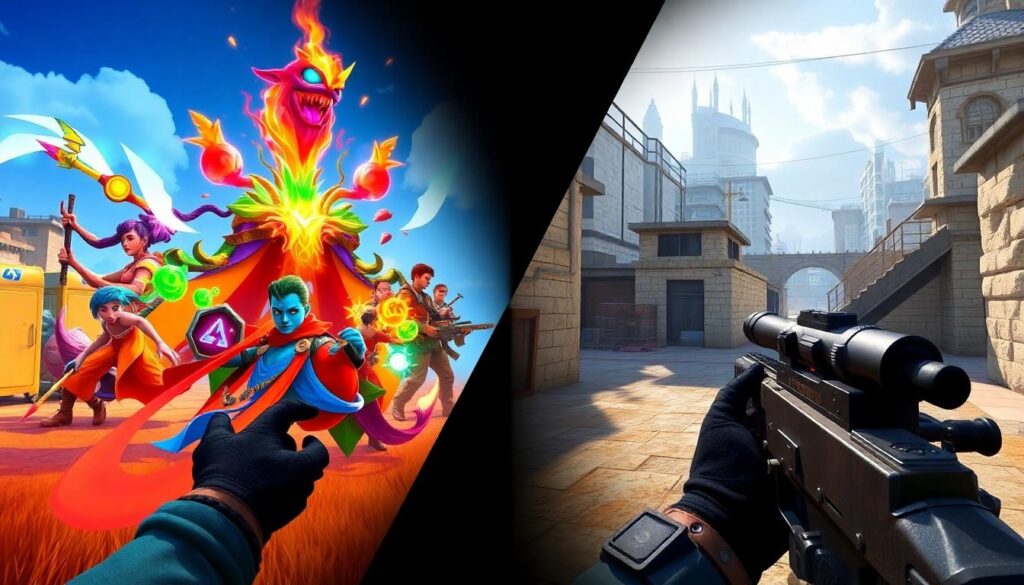
Graphics and visuals play a crucial role in shaping players’ experiences in both Valorant and Counter-Strike 2. Each game employs unique artistic choices that appeal to different player preferences.
Art Style Comparison
Valorant features a vibrant, stylized art design that emphasizes color and character. This approach makes agents distinct and visually appealing, fostering an engaging atmosphere. Players appreciate the clarity of abilities and maps, enhancing gameplay. Counter-Strike 2, however, opts for realism with detailed environments and realistic textures. This choice promotes immersion and tactical engagement, reinforcing its competitive legacy. While Valorant’s art enhances character-based gameplay, Counter-Strike 2 provides a grounded, tactical experience where visual fidelity supports traditional gunplay.
Performance on Different Systems
Performance varies significantly between Valorant and Counter-Strike 2. Valorant is optimized for low-end systems, ensuring smooth gameplay even on less powerful hardware. The game targets a wide player base, often running smoothly at higher frame rates. Counter-Strike 2 demands more from systems, requiring better hardware for optimal performance. Players on higher-end machines can benefit from improved visuals and frame rates. Understanding these performance requirements helps players choose a game that aligns with their hardware capabilities and desired experience.
Community and Esports Scene
Both Valorant and Counter-Strike 2 boast vibrant communities and competitive ecosystems. Their player bases contribute significantly to the longstanding popularity of tactical shooter games.
Player Demographics and Engagement
Diverse player demographics shape both titles. Valorant attracts a younger audience due to its colorful characters and team-based mechanics. Agents appeal to players who enjoy character-driven gameplay. CS2, in contrast, draws a slightly older crowd, thanks to its deep-rooted legacy and focus on traditional shooting mechanics. Engagement levels vary; Valorant frequently hosts themed events and updates to keep players interested. Counter-Strike 2 relies on its established community and consistent gameplay, which fosters long-term player loyalty and engagement.
Competitive Landscape
Intense competition characterizes both titles. Valorant’s esports scene features annual tournaments that showcase up-and-coming talent and established professionals. Riot Games supports a robust structure with regular updates and new content. In CS2, the landscape remains competitive as veteran organizations lead the charge in prestigious events. Major tournaments like ESL Pro League and Blast Premier attract worldwide attention. Both communities foster rivalry and excitement, making each game a key player in the competitive esports arena.
Overall Player Experience
Both Valorant and Counter-Strike 2 offer unique player experiences that cater to different preferences and skill sets.
Learning Curve and Accessibility
Valorant features a moderate learning curve, especially for new players. Agents’ abilities introduce diverse gameplay mechanics, encouraging experimentation. Tutorials and practice modes help players familiarize themselves with the mechanics and strategies. Accessibility also plays a key role, as Valorant runs smoothly on low-end systems, making it more reachable for a broader audience. Counter-Strike 2, however, emphasizes traditional gunplay and map knowledge. While it can be challenging for newcomers, players who excel in aiming and positioning often find success. Higher hardware requirements may deter some potential players, limiting its accessibility compared to Valorant.
Social Features and Communication
Valorant incorporates social features that enhance teamwork and player interaction. An in-game voice chat system fosters real-time communication among teammates. Players can utilize ping systems to convey essential information without speaking. On the other hand, Counter-Strike 2 offers a robust communication framework but provides fewer built-in social features. Clans and community servers serve as platforms for player engagement, yet they rely heavily on external applications for voice communication. Both games emphasize the importance of coordination, but Valorant’s design focuses on facilitating easier communication and social connections.
Conclusion
Valorant and Counter-Strike 2 each offer unique experiences that cater to different player preferences. Valorant’s vibrant characters and abilities create a dynamic environment where teamwork and strategy shine. Its accessibility and engaging gameplay attract a younger audience eager for character-driven action.
On the other hand, Counter-Strike 2’s focus on realism and traditional gunplay appeals to those who appreciate a classic tactical shooter experience. Its established legacy and competitive integrity foster a loyal player base that values skill and precision.
Ultimately, both games contribute significantly to the tactical shooter genre, providing players with diverse options for competitive play. Whether one prefers the colorful chaos of Valorant or the gritty realism of Counter-Strike 2, both titles promise thrilling gameplay and a rich community.